

Keyword mapping is at the foundation of any long-term search engine optimization strategy. Great content can lead to more traffic, quality backlinks, and better leads.
The best part is that, when done right, it creates a steady stream of passive traffic. Learn how to maximize your efforts with our guide for keyword mapping.
If you’re looking for a MUCH FASTER way to use this strategy, check out our new article on using AI to improve SEO using Google Search Console.
Table of Contents
Brainstorming Keywords
To start, you need to brainstorm a lot of potential keywords that are relevant to your business. It helps to put yourself in your clients’ shoes.
Clients and businesses use different lingo. You need to think about what the customer would type in Google to find your business.
There are a number of tools to help you with this part of the process.
Free Keyword Mapping Software
- Google Suggest
- Google related searches
- Google Search Console
- Google Trends
- Answer The Public
Paid Keyword Mapping Software
- Mangools KWFinder
- UberSuggest
- Moz Keyword Explorer
- Ahrefs
- SEMRush
- SpyFu
- Keywords Everywhere (Chrome Extension)
- Serpstat
Google Suggest
You’ve probably used Google Suggest without even knowing it. It is the keyword predictions as you type in your search query in Google. This feature is meant for the end user but there are some great data for marketing, too. Google only shows suggestions based on past searches from its database. That means you know other Google searchers have used those suggested keywords in the past. If you’re looking for the lingo of your client, this is a great place to start.

Google Related Searches
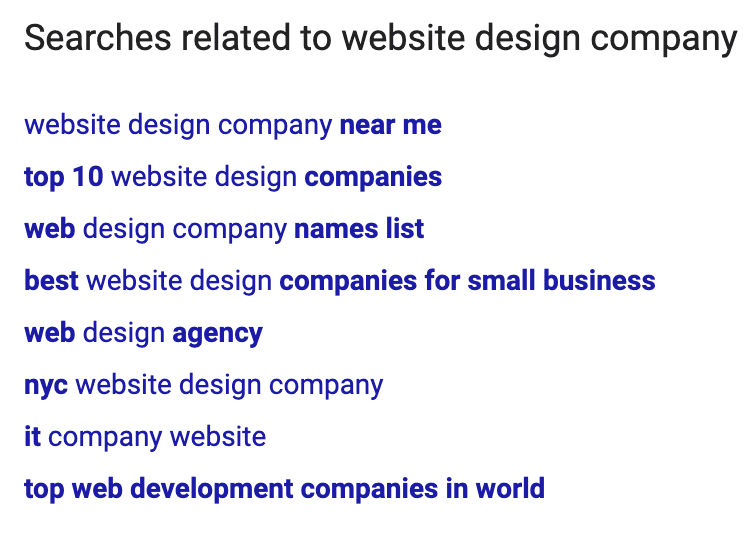
The related searches that show up at the bottom of a Google search can provide interesting insight. Similar to Google Suggest, you know these are phrases other searchers have used before in the past. But unlike Google Suggest, these phrases don’t have to start with the same keywords. It can be one of the best ways to brainstorm a lot of new keywords!
Paid Tools
There are a number of great paid options if you want to step up your game. For this article, we’re going to focus on Moz Keyword Explorer. It provides you with a lot of insight into each keyword phrase and can speed up the research process a ton! You can sign up for a free account and get 10 keyword checks a month.
We’ll get back to this tool in just a moment…
Google Search Console
If you have a website that has been running a while, GSC (Google Search Console) can be a gold mine. If you don’t have this tool hooked up to your site, stop everything and go set up a GSC account now! It is free and one of the rare times you can get data directly from Google. If you have been collecting data with GSC, you just need to view the performance area to see what people have been using to find you.
Check Competition
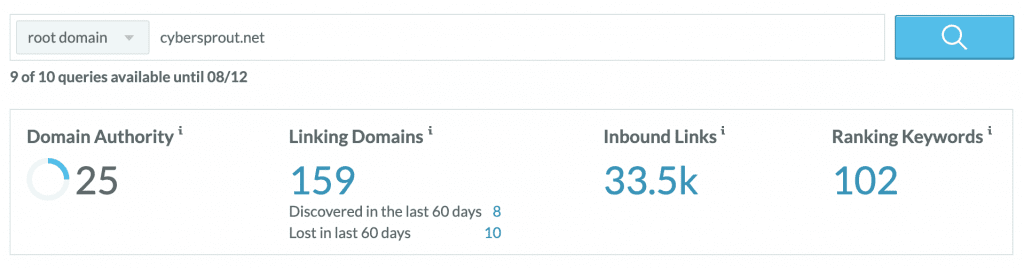
Before analyzing the keyword phrases and competition, we need to take a look at your website’s domain authority. This metric is a composite score that gives you a score from 0 to 100. It is essentially your reputation in Google’s eyes.
It is important to note nobody outside of Google truly knows this score, but several SEO tools have reverse engineered a way to estimate this metric. We’re going to use Moz’s Site Explorer. You’ll have to sign up for a free account to use this tool. Once you get a chance to analyze your site, write down the domain authority.
At this point, we are ready to analyze the keyword list we brainstormed. We need to thin it down to the low-hanging fruit.
Using a keyword competition tool we need to take a hard look at the search volume and competition for each keyword phrase. There are other metrics we could utilize but those are the two big ones. We’re going to use Moz Keyword Explorer.
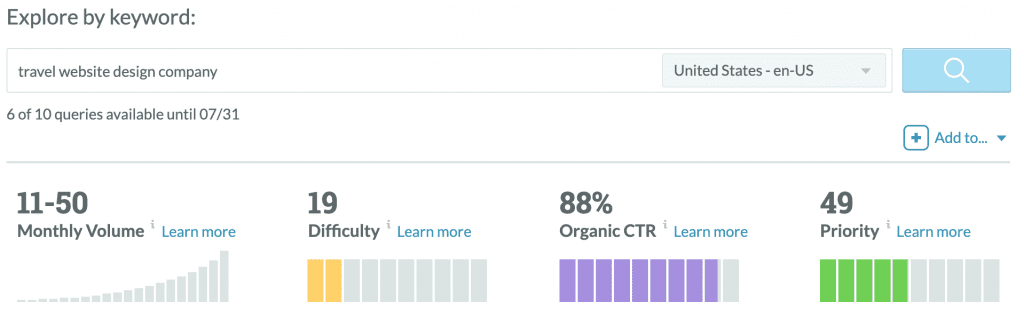
Volume is pretty straightforward. If nobody is searching for a phrase, then there is no point in targeting it. If there is enough volume to make the phrase appealing, then we need to bring in the competition metric.
If the competition metric is roughly 20 points higher than your domain authority, that keyword phrase is going to be too tough. Cross it off the list. If it is 1-19 points higher, make a note to consider it later down the road.
If your domain authority is higher than the competition, that is great! That means there is a good chance to get traffic from that keyword phrase.
If you have a new website, then your domain authority is likely at zero or close to it. If that is the case, I’d recommend only targeting keyword phrases with a competition score of 30 or below.
Content Plan
Using the thinned-down keyword phrase list, it is time to create a content plan. I’d recommend setting up a schedule for at least 6 months out. There should be one article per keyword phrase.
The real key here is to create the best content available for the keyword phrase. It helps a ton to Google a keyword phrase and then see what content is included in the top 2-3 results.
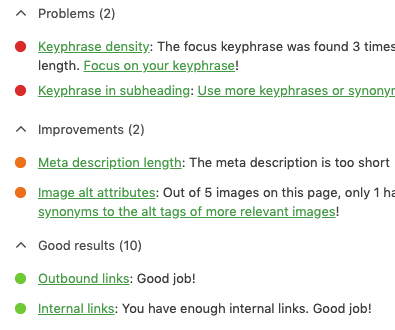
After you’ve written the article, it is time to optimize the article for the focus keywords. If you are using WordPress, Yoast is a fantastic free tool that helps guide you on how to optimize each article. It gives you real-time feedback for your focus keywords.
The last step is to make sure the content contains various media that keep the reader engaged. This could be photos, videos, quotes, graphics, polls, etc.
Making the article truly engaging is the most often overlooked step. It is vitally important, especially for competitive keywords.
If Google sees visitors viewing your article and then going back to the search results, that sends a signal the content didn’t keep the reader interested.
Periodic Audit
Depending on how frequently you post, you should audit your content at least once a year. Here is a good place to start:
- Broken Link Scan: Google isn’t a fan of broken links so clean up links that may have changed over the years.
- Internal Linking: Go back over your content and look for opportunities to link between articles. It is a bonus If you can make the link to the other article similar to the focus keyword for that article.
- Google Search Console: New keyword opportunities pop up every year. Check in a few times a year with GSC to discover new keyword phrases.
Frequently Asked Questions
What is keyword mapping in SEO?
A keyword map lays out the strategy and optimization plan to build up key traffic from search engines for your website.
What are the best free tools for keyword mapping?
Your best free tools for doing research in the keyword mapping process are Google Search and Google Search Console. AirTable is my favorite tool for organizing the plan but Google Spreadsheets also work.
How do I track the results of my keyword mapping strategy?
A lot of the paid SEO tools, like Moz and SERPWatcher, help you track results. A free option would be to use Google Search Console exports and then track the results in a spreadsheet.

